Showing posts with label kawasaki. Show all posts
Showing posts with label kawasaki. Show all posts
Sunday, May 12, 2013
Kawasaki Athlete Extraordinary User Manual

Indicator panel is still using the old model, the digital speedometer does not exist, but the engine is equipped with racing wheels and dual disc and rear suspension system using a mono-shock suspension dial unitrack parallel. In terms of competitors, with prices ranging from Rp. 14jt (going) an athlete to compete against the Suzuki Shogun RR, and CW Supra X125. Panel kawasaki athlete.
From the motor side of the machine is equipped green flat with a 124.6 cc capacity, the air cooled 4-stroke, four-speed gear rotation. What makes the difference is the location of the tank, instead of under the seat or in front under the steering wheel as the ZX, Kawasaki 130, but through benar2!, so do not get off the engine if you want to fill bengsin. This is a great idea, combines comfort and style bengsin filling motorcycle racing. Given the tank migration otomaris provide more space for luggage under the seat.

2013 Kawasaki ER 6nL ABS manual
2013 Kawasaki ER-6nL ABS
This is the latest evolution of the model that introduced the “Fun. Style. Easy.” concept to the world. Increased engine performance makes the new 2013 Kawasaki ER-6nL ABS even more fun. Aggressive street-fighter looks make it even more stylish. And a slimmer new chassis and comfortable new seat make it even easier to ride than before.
The 2013 Kawasaki ER-6nL ABS with Parallel Twin engine configuration was chosen as the best balance of good power characteristics and compact size. Engine tuning delivered both a rider-friendly character ideal for new riders and performance to put a smile on the faces of more experienced riders. The engine’s compact size was one of the keys to realizing the New Kawasaki ER-6nL slim package. The 2013 engine offers more low-mid range torque for more fun and greater usability in everyday riding situations, while maintaining the smooth, high-revving character of its predecessor.
The 2013 Kawasaki ER-6nL ABS with Liquid-cooled, DOHC, 8-valve 649 cm3 Parallel Twin with fuel injection delivers smooth, responsive performance, especially in the low and medium rpm ranges. The engine was tuned for rider-friendly power characteristics that will inspire confidence in new riders.The DFI settings boost the engine’s bottom-end power while letting it rev more quickly. The sub-throttle valve equipped 38mm Keihin throttle bodies offer optimum performance and ride ability. Located behind the main throttle valves, the sub-throttles are controlled by the DFI system’s ECU for a precise throttle response, similar to a constant velocity carburetor.
Under-engine muffler with larger volume and revised internal construction delivers increased torque in the everyday range below 7,000 rpm. The increased performance facilitates control at lower rpm and contributes to the enhanced enjoyment of the new Kawasaki ER-6nl.

2013 Kawasaki ER-6nL ABS - Specifications
Engine:Type Liquid-cooled, 4-stroke Parallel Twin
Displacement 649 cm³
Bore and Stroke 83.0 x 60.0 mm
Compression ratio 10.8:1
Valve system DOHC, 8 valves
Fuel system Fuel injection: ø38 mm x 2 (Keihin)
Ignition Digital
Starting Electric
Lubrication Forced lubrication, semi-dry sump
Drivetrain:
Transmission 6-speed, return
Final drive Sealed Chain
Primary reduction ratio 2.095 (88/42)
1st 2.438 (39/16)
2nd 1.714 (36/21)
3rd 1.333 (32/24)
4th 1.111 (30/27)
5th 0.966 (28/29)
6th 0.852 (23/27)
Final reduction ratio 3.067 (46/15)
Clutch Wet multi-disc, manual
Frame:
Type Perimeter, high-tensile steel
Wheel travel:
Front 125 mm
Rear 130 mm
Tyre:
Front 120/70ZR17M/C (58W)
Rear 160/60ZR17M/C (69W)
Caster (rake) 25°
Trail 110 mm
Steering angle (left/right) 35° / 35°
Suspension:
Front 41 mm telescopic fork
Rear Offset laydown single-shock with adjustable preload
Brakes:
Front: Dual semi-floating 300 mm petal discs
Caliper Dual piston with ABS
Rear: Single 220 mm petal disc
Caliper Single-piston with ABS
Dimensions:
Overall length 2,100 mm
Overall width 770 mm
Overall height 1,110 mm
Wheelbase 1,410 mm
Ground clearance 130 mm
Seat height 805 mm
Curb mass 206 kg (includes full tank of fuel)
Fuel capacity 16 L
Performance:
Maximum power 35 kW {47.6 PS} / 7,500 rpm
Maximum torque 52.5 N·m {5.4 kgf·m} / 4,200 rpm
Colours:
Candy Lime Green Type 2 Metallic Spark Black
2013 Kawasaki ER-6nL ABS Review and Specifications
Friday, May 10, 2013
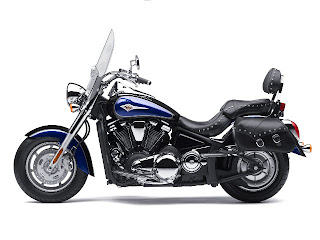
KAWASAKI VULCAN 2000 CLASSIC LT
 |
| Kawasaki Vulcan 2000 Classic LT |
Road-tripping style is all the machines on large, long-range and luxury. Kawasaki had the biggest, baddest V-Twin Cruiser on the street, so it was natural to add some special items and create the biggest, baddest bike trips there - the Vulcan ® 2000 Classic LT. Based on a 2053 cc fuel-injected V-twin base, equipped with Kawasaki Classic LT beautiful leather saddlebags, a custom touring seat, passenger backrest, and an acrylic windshield wind cheating. The world just shrunk. The biggest Vulcan is ready to transport two people and a lot of luggage with power and style to spare.
Specifications
Engine
Four-stroke, 52-degree V-twin, dual cams, eight valves
Displacement
2053 cc/125ci
Bore x Stroke
103.0 x 123.2 mm
Maximum Torque
141 lb-ft @ 2,800 rpm
Cooling System
Liquid, plus cooling fins
Compression Ratio
9.5:1
Induction
Digital fuel injection, dual 46mm Keihin throttle bodies (2)
Frame Type
Steel, double-cradle with box-section single-tube backbone
Ignition
TCBI with Digital Advance
Transmission
5-Speed with positive neutral finder
Rake/Trail
32°/7.2 in.
Suspension Front / Wheel Travel
49mm telescopic fork / 5.9 in.
Suspension Rear / Wheel Travel
Triangulated steel pipe swingarm with direct-action single shock, with fully-adjustable spring preload, eight-way rebound damping / 3.9 in.
Front Tire Size
150/80-16
Rear Tire Size
200/60-16
Wheelbase
68.3 in.
Front Brakes
Dual 300mm Discs with 4-Piston Calipers
Rear Brakes
Single 320mm disc with two-piston caliper
Fuel Capacity
5.5 gal.
Ground Clearance
5.3 in.
Seat Height
26.8 in.
Curb Weight
884.2 lbs.
Overall Length
99.8 in.
Overall Width
40.4 in.
Overall Height
58.3 in.
Color Choices
Metallic Diablo Black/Candy Imperial Blue
2013 Kawasaki Ninja ZX 10R Specifications

Kawasaki Ninja ZX-10R Specifications
Engine: Liquid-cooled 998cc Inline-Four, 16-valves
Diameter and Manoeuvre: 76.0 x 55.0mm
Densification Ratio: 13.0:1
Hydrocarbon Transferral: Fuel-injection
Collection: Wet multi-plate footwear coupler; Line feat Transmittal: Six-speed
Test Intend: Distributor 17F/39R
Articulate: Twin-spar aluminum
Fore Debarment: 43mm inverted Showa BPF; 3-way adjustable for formation preload, compression and rebound damping; 4.7 in. motion
Backside Dangling: Crosswise back-link Showa gas-charged scandalise; 4-way adjustable for outflow preload, high/low-speed densification and recover damping; 4.9 in. traveling
Cheater Brake: 310mm petal discs with radial-mount Tokico four-piston calipers
Lift Brake: 220mm circle with single-piston calliper
Tires: 120/70R17, 190/55R17
Bit Unit: 439 lbs.
Wheelbase: 56.1 in.
Sit Pinnacle: 32.0 in.
Supply Ability: 4.5 gallon
MSRP: $14,299
Emblem: Citrus Green/Metallic Glint Negroid; Pearl Unexciting White/Metallic Face Illegal
Thursday, May 9, 2013
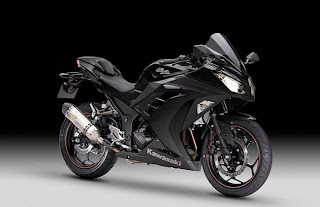
KAWASAKI NINJA 300 specs
The new Ninja 300 comes with an advanced diamond-type frame built with the racing necessities. The 296cc parallel-twin engine delivers the maximum power output of 35bhp, which is transferred to the rear wheel via a 6-speed gearbox and a chain final drive. Its 140Mm rear tire and the latest Nissin ABS brakes will make sure you get both the acceleration and the stopping power. The bike gives you the confident on the highways and city roads. The 2013 Ninja 300 features a modern multi-function LCD screen with speedometer, clock, fuel gauge, dual trip meters, odometer and the awesome Economical Riding indicator, wile the white LED tail-light grants the best visibility at night. For beginners and even intermediate riders, the all-new Ninja 300 might be just the perfect toy.

2013 Kawasaki Ninja 300 ABS Technical Specification:
Engine: Four-stroke, liquid-cooled, DOHC, parallel twin
Displacement: 296cc
Bore x stroke: 62.0 x 49.0mm
Compression ratio: 10.6:1
Cooling: Liquid
Fuel injection: DFI with dual 32mm throttle bodies
Ignition: TCBI with digital advance
Transmission: Six-speed
Final drive: Chain
Frame: Semi-double cradle, high-tensile steel
Wheelbase: 55.3 in.
Rake / trail: 27 degrees / 3.7 in.
Front suspension / wheel travel: 37mm hydraulic telescopic fork / 4.7 in.
Rear suspension / wheel travel: Uni-Trak with 5-way adjustable preload / 5.2 in.
Front tire: 110/70-17
Rear tire: 140/70-17
Front brake: Single 290mm petal-type disc with two-piston hydraulic caliper and ABS
Rear brake: Single 220mm petal-type disc with two-piston hydraulic caliper and ABS
Overall length: 79.3 in.
Overall width: 28.1 in.
Overall height: 43.7 in.
Seat height: 30.9 in.
Curb weight: 174 kg.
Fuel capacity: 17 litre
Colour: Lime Green / Ebony with Special Edition Graphics
Tuesday, May 7, 2013
The KAWASAKI W800
What is it with Classics making a big time come back? Triumph with their Classics series has never left the scene, neither has Ducati with their Sport Classic GT, Honda is making a comeback with their CB1100, so is Yamaha with the Sakura and Royal Enfield with the Classic 500. Well then can Kawasaki be far behind? Actually they always had the W650 (2004 & 2005 model), but some time back, the motorcycle stopped production only to make way for the W800. The W800 looks a lot like the RE Classic 500 which in fact is a great compliment in itself. Anyway, for us classic suckers, the more the merrier! And Kawasaki has released the official video for W800. Superb video and what a looker! Enjoy!
Here is the official link to Kawasaki W800.
Read more »
Monday, May 6, 2013
Kawasaki Z1000 2007 2008
Kawasaki Z1000 2007 2008 
The all-new metal twin-tube play was intentional for the Kawasaki Z1000. This twin-tube plan is real similar in construct to the Kawasaki ZX10R Ninja; the play tubes go over the engine, allowing the wheel to acquire a constrictive gross thought that then makes the bike casual to clutch with your knees for accessorial know.
The Liquid-cooled, DOHC, 16-valve 1,043 cm3 In-line tetrad offers a greater cognition bringing and stronger force curve than the old Z1000 models.
The new 5-spoke stamp wheels men the bike's lancinate figure. The spokes are machined moral the rim furnish, adding to the high-quality attending. The machined cutouts were purposely intentional to disc in the modify direction, a figure environs also panoptical on the new engine covers.
Kawasaki service manual KLX 250

For 2013, the bike obtained only fashion improvements featuring new colour and photograph schemes. Unfortunately, the technical specs remained unchanged, so don’t predict to any power enhancements. Thankfully no one had any vital bitchs on the previous 249cc liquid cooled engine, so it’s no longer this kind of unhealthy news after all. The engine includes a 34mm semi-flat slide Keihin CVK carburetor, an aluminum defend, an electrical fan and dual lightweight, Denso radiators.
Like the previous era, the 2013 adaptation is still constructed on a lightweight, high-tensile metal frame, designed to keep the bike’s center of gravity to as little as imaginable to extend efficiency. The low center of gravity is mixed with a short wheelbase which offers an extra tight turning radius helping you to maneuver with agility even on the tightest monitors.
Download manual here
Sunday, May 5, 2013
The 2013 Kawasaki Z1000

It’s some new motorcycle from Kawasaki Motor in 2013. The name is 2013 Kawasaki Z1000. The bike attracts riders with its muscular good looks and then seduces them with its incredible power and charismatic feel. Serious torque, comfortable ergonomics, and a mesmerizing aesthetic make for an unforgettable experience. Its distinctive look begins with a front cowl that slopes back radically, highlighting the Z’s aggression. The line-beam headlights are integrated nicely into that angled cowl. Then its shapely fuel tank is flared on the sides for serious knee grip and is slimmer in back for a snug fit.

The engine arrive with 1.043cc type four-stroke, liquid-cooled, DOHC, four valves per cylinder, inline-four. Fuel System used Digital Fuel Injection (DFI®) with four 38mm Keihin throttle bodies, oval sub-throttles. Ignition used TCBI with Digital Advance and six-speed of transmission. The engine inline-four packs impressive horsepower combined with the sort of flexible, mid-range-heavy power delivery that pastes a silly grin on the face of anyone lucky enough to be aboard. 38mm downdraft throttle bodies allow intake air to travel to the engine in the shortest possible distance.

The 2013 Kawasaki Z1000 frame used aluminum backbone frame, similar in concept to the Ninja® ZX™-10R. The design allows a narrow mid-section, which fosters a high degree of rider comfort and feedback in addition to keeping weight low and chassis rigidity high. The frame’s five-piece construction consists of steering stem, left and right main frames, and two cross pieces. The two main frame components have open C-shaped cross sections. The main frame and swingarm pivot elements are cast as a single unit, with welds eliminated wherever possible for a more aesthetically pleasing look. And the subframe is a lightweight aluminum die-casting, which is light, smooth and beautiful.

For suspension the 2013 Kawasaki Z1000 used 41 mm inverted cartridge fork with stepless compression and rebound damping, adjustable spring preload / 4.7 in for front side and horizontal monoshock with stepless rebound damping, adjustable spring preload / 5.4 in for rear. For brakes this bike used dual 300mm petal-type rotors with radial-mount four-piston calipers (Caliper piston size is 4x30 mm) in front. A radial-pump front brake master cylinder contributes to the superb control and feel offered by these high-end calipers. For rear used single 250mm petal-type rotor with single-piston caliper.

2013 Kawasaki Z1000 released in US MSRP Price: $10,999 USD. For color choices is Golden Blazed Green and Metallic Spark Black. Kawasaki’s also give 12 months of warranty.
KAWASAKI NINJA 300 LAUNCHED AT 3 5 LAKH
Bajaj Auto has launched the Kawasaki Ninja 300 at Rs. 3.5 lakh. Ninja 300 will replace the Kawasaki Ninja 250R, which has been discontinued with effect. The Ninja 300 looks alike the new 2013 Ninja 250R, which is being sold in the international markets. The Ninja 300 is available in two different colour options- White and Ninja Green. Bookings were opened recently with a Rs. 40,000 token amount, while the deliveries will be commenced shortly.

The new Kawasaki Ninja 300 is basically the 2013 Ninja 250 R with a bigger 300cc, Liquid-cooled, 4-stroke Parallel Twin cylinder engine, which returns a maximum power output of 38bhp and with a peak torque of 27Nm. The new Ninja 300 features a new front fascia, which includes a redesigned headlamp cluster having two headlamps instead of 250Rs single headlamp. It has a new petrol tank, body panels, graphics and rear light cluster. It also features new alloy wheels and new revolutionary slipper gear for better performance. The ride and handling of the bike is also improved by a great extent, it becomes sharper and direct and feels controlled on almost all speeds. The city rides are easy now and you will enjoy riding it hard on highways and on tracks.

Kawasaki Ninja 300 Engine:
Type: Liquid cooled, 4 stroke parallel twin
Displacement: 297cc
Bore and stroke: 62.0x49.0
Compression ratio: 10.6:1
Valve system: DOHC, 8 valves
Fuel system: Fuel injection with dual throttle valves
Ignition: Digital
Starting: Electric
Lubrication: Forced lubrication, wet sump
Transmission: 6 speed, return
Max power: 39Ps@11000rpm
Max torque: 27NM@10000rpm
Kawasaki Ninja 300 Chassis:
Type: Tube diamond; steel
Wheel travel: Front: 120mm, Rear: 132mm
Kawasaki Ninja 300 Tyres:
Front: 110/70x17
Rear: 140/70x17
Kawasaki Ninja 300R Suspension:
Front suspension / wheel travel: 37mm hydraulic telescopic fork / 4.7 in.
Rear suspension / wheel travel: Uni-Trak with 5-way adjustable preload / 5.2 in.
Kawasaki Ninja 300 Brakes:
Front: Single 290mm petal disc. Caliper: Dual-piston
Rear: Single 220mm petal disc. Caliper: Dual-piston
Kawasaki Ninja 300 Dimensions:
Overall length: 2015mm
Overall width: 715mm
Overall height: 1110mm
Wheelbase: 1405mm
Ground clearance: 140mm
Seat height: 785mm
Curb mass: 172kg
Fuel tank capacity: 17 litres
PRICE OF KAWASAKI NINJA 300: RS 3,50,000
Friday, May 3, 2013
Kawasaki Ninja 250 Modified Japan

Kawasaki Ninja 250 sport has a very strong view from out of the factory. So do not be surprised if many owners of motor sport from Japan is improving the style looks by modifying the MotoGP bike.
The consideration, in addition to easy to modify the model, supporting accessories are also already widely available in the market. But Studio Custom Motor Bike try to present something different through the Kawasaki Ninja 250 Flat Traker epithet.
Modifications are carried not too extreme but makes the Ninja has the character of a very powerful naked bike and look sexy. The whole body of the original "pellets from Japan" is taken off and replaced with new clothes. Anyone who sees this bike certainly not be surprised if this Ninja 250.
The original Ninja tank that fat was replaced with a smaller tank model of peanut. It is unknown how the content of the fuel capacity of this tank. Flat Traker stern look was very different. Taper models that characterize todays motor sport to change the model of a typical horizontal Cafe Racer.
External appearance look more frightening to doff the green color cast. While the sector whitewash yellow gold frame to support the view outside.
It seems that this bike is only for the rider alone. This can be seen from the seat of the model adopted for the single seater. An interesting look at the lighting sector, naked Ninja uses HID lamps are picked from the Toyota Rush. The lamp is placed in the right shockbreaker.
In order to look increasingly beyond the maximum, then the racing part was trying to smell like a foot step followed X-Race, K & N air filter and exhaust alerts Leovince SBK racing.
Changes in the sector of the legs did not seem eccentric and adapted to the posture Flat Traker. Alloy wheels wrapped bars next six sector Battlax Bridgestone 120/70-17 front tire, while the back carries the sector Battlax 150/70-17 Bridgestone tires.
Specification
- Handlebar: Fatbar
- Rearview: Koso
- Headlights: Toyota Rush + HID
- Rear lights: After Market
- Exhaust: Leovince SBK
- Footstep: X-Race
- Air Filter: K & N
- Front tire: 120/70-17 Bridgestone Battlax
- Rear tire: 150/70-17 Bridgestone Battlax
- Custom: Studio Motor Bike custome
- Painting: Studio Comet
2012 kawasaki Vulcan 900 Custom manual

The Vulcan 900 Patronage is corroborated by the 903cc liquid-cooled V-twin offers the optimal carry of performance and manoeuvrability, Forward-mounted pay controls for laid-back moving relation, Fat 180-series erect tyre is largest in clas, Classy artefact includes convenient provide underestimate, 5.3-gallon supply vessel is maximal in family, Digital carbon shot for fine enrich greeting and improved fuel saving. lendable in two emblem Pearl Purplish Someone Mineral / Candy Sparkling Orange .
2012 kawasaki Vulcan 900 Custom Specifications
- Engine : Four-stroke, liquid-cooled, SOHC, four valves per cylinder V-twin
- Displacement : 903cc / 55.1 cu. in.
- Bore x Stroke : 88 x 74.2 mm
- Maximum Torque : 58.2 lb.-ft. @ 3,500 rpm
- Compression Ratio : 9.5:1
- Cooling System : Liquid
- Fuel System : DFI® with dual 34mm Keihin throttle bodies (2)
- Ignition : TCBI with Electronic Advance : Transmission
- 5-Speed
- Final Drive : Belt
- Frame : Double cradle, high-tensile steel
- Rake/Trail : 33°/7.2 in.
- Front Suspension / Wheel Travel : 41mm hydraulic telescopic fork / 5.9 in.
- Rear Suspension / Wheel Travel : Uni-Trak® swingarm, 7-way adjustable spring preload / 4.1 in.
- Front Tire Size : 80/90x21
- Rear Tire Size : 180/70x15
- Wheelbase : 64.8 in.
- Front Brakes / Rear Brakes : 300mm hydraulic disc / 270mm hydraulic disc
- Fuel Capacity : 5.3 ga
2012 Kawasaki KX450F Review
The Kawasaki KX450F is to become the jack of all trades in the world of dirt bike. KX450F were on the podium in Pro Motocross, Supercross, WORCS, GNCC, enduro cross and track events, flat and homogeneous. The KX450Fs success has always revolved around two main features: an enormous power and capacity to perform well enough about it.
Although he won the races, the KX is a great rider ergonomics, too heavy for a while (some would say rude), low-power delivery and less cornering behavior of a net has traditionally been the KX450F winning popularity contests. When we drove across the frozen lakes of the 2011 version and the motocross track cross-country level, we have more or less understood the wheel. When we learned about the changes to the Kawasaki KX450F 2012, we could not wait to try it by pressing the start of the famous Red Bud Track Buchanan, MI.
Although he won the races, the KX is a great rider ergonomics, too heavy for a while (some would say rude), low-power delivery and less cornering behavior of a net has traditionally been the KX450F winning popularity contests. When we drove across the frozen lakes of the 2011 version and the motocross track cross-country level, we have more or less understood the wheel. When we learned about the changes to the Kawasaki KX450F 2012, we could not wait to try it by pressing the start of the famous Red Bud Track Buchanan, MI.

Kawasaki is proud of the improvements in the 2012 KX450F. We drive through to summarize quickly, but you can read about these changes in detail here.
Kawasaki complained too great in a variety of ways. First, there is a new frame thinner, but the most important of the handlebars can be adjusted to four different configurations, with new triple clamps, while the footrest can be raised or lowered to accommodate personal preferences. If the KX450F still feels a little big, there is a link suspension option that reduces the seat height of 6 mm. The end result is more ergonomic adjustable motocross bike in recent history.

Kawasaki has also worked to improve the reliability by incorporating a thicker first gear, a crankshaft specially designed to improve the balance and the low gas engine, piston rings and thinner to improve the atmosphere. They cut small pieces of the whole weight of the bike, get to the point of installing a fuel lighter. The new electronic fuel injection EFI makes setup easier than ever. The new exhaust system was designed to reduce weight, improve performance and meets the AMA sound. Something entirely new launch system is a control Kawasaki. It is designed to improve grip and handling out of the starting line before the kick return to normal mode, the pilot selects third gear.
Red Bud is a wonderful creation of motocross, the earth well maintained motocross track and a world-class. Obviously you can not do a bike test "real world" in a perfectly groomed national motocross track with factory technicians on his shoulder. We tried to find a variety of driving conditions, in addition to the motocross track, but not yield a "first impression" as a test of the bike properly. Our first impression after having spent so long in 2011 and KX450F 2010, was how the 2012 model felt much smaller and lighter than their predecessors.

One thing that has helped cornering and overall handling of the 2011 KX450F is milder calibrate the fuel injection mapping the lower end of the power range. Tuning the fuel injection KX450Fs earlier was complex, requiring special software and adapters. It is a model 2012, changing three base maps EFI take up to 10 seconds without special tools. Kawasaki has three connectors EFI colored, soft ground, medium, normal, hard ground, and that fire only in the wiring. Terrain map is designed for hard conditions of low voltage, so its really the power of "soft" of the three. Initially embarrassed to admit we were, we wanted a softer, hit the "hard pack / map without Traction , but said later that most of the other editors of the magazine she felt better, even waking up in the map.

Even brand new, with zero time on the clock, changed in 2012 KX450F gently under the power and the clutch worked well. We noticed a considerable difference between the second and the third was a bit too big. Adding a tooth or two rear sprocket would be an improvement. The clutch is light and progressive feel really helps the customs of the KX450F, but how long the last vestiges clear link. Kawasaki has improved in 2012 to change the clutch springs a little stiffer to cure the most talked about problem of wear they had with older models. In two days we drove in 2012, the clutch has never wavered or the need for excessive regulation. The first gear is quite low, even for off-road use, especially considering there is so much torque on tap.

It was a hot 97F on the second day. As we walked slowly and pretend to be Endurocrossers, we cooled the KX450F the splashes through the water, but we do not need. Radiators gurgled a bit slow moving, but never boiled their cooling. There is another improvement over 2010 and 2011 models. Sometimes when the engine was really hot, it would flame out at low revs and take several shots to restart. Its something weve never had a problem with last year and could probably be cured with careful tuning EFI. Besides the three main "plug and play" tables of the new injection system Kawasaki is adjustable via a PC running Windows.
Despite some major changes in the chassis remains vague as momentum KX450F in a row. Its a big heavy bike that likes to be controlled with the accelerator. When mounted aggressive it revolves around the power faster, but it does not eliminate the line inside. In 2012 KX450F Sharp, but you have to work on it and the bike does not wander more than we want.

We tried to improve cornering by adjusting the height of the pallet fork extension and compression settings, SAG, the rear suspension and high-speed compression and support for the positioning of the hand to find the ideal balance of traction, stability and ability to change. In turn, improved, but never good. Despite this, a Kawasaki is a great speed exceptionally stable. KX450F rear brake is excellent, but the front is still on average. We Bled the front brake lever and tried different settings, but never had to get rid of pain "on or off" feeling. Cushions or different than a rotor might help. We would like to try a different front tire as well, which could potentially improve both the performance cornering and braking.
2012 suspension KX450Fs not beat a small effect on the track lumber. It was difficult to get an electric shock preload back off enough to get the 95-100mm compressed with 160 pound rider. The heavier riders do not complain much, but it would be nice if equipped with a Kawasaki 450 forks with adjustable preload a SFF to use, it is 250F. Kawasaki modified the link shaken this year to improve the traction of the rear wheel. Please note the beginning of the establishment was essential, and when we retreated to soak up the pressure to split wheel jumping harder. Without touching the bottom of the resistance has always been excellent, and although the bottom of the suspension the effect is never too difficult.

Keep in mind that we are probably lighter than the average 450 rider, there was our favorite chassis settings in Red Bud:
Kawasaki technicians told us that they forget to worry about using the perfect starting techniques, adding that the system rewards Launch Control novice drivers are not professionals. Thats how it works. Mounted on the door and press the launch control button until it flashes. Select second gear, the pin and release the clutch when the gate drops. The ignition timing is delayed a bit by the launch control system until the rider approaches the third speed, improving traction.
Kawasaki Launch Control system does not work begins in third gear, which is a shame, because testers found it easier and easier to leave port for the third. Kawasaki has a lot of torque and power to a strong third gear starts, as you can see here.
The KX-F is really a fun bike. Please do not find mountains and turn every piece of land from a jump. With a low speed first, the clutch smooth and long wheelbase of the KX450F feel stands up to the top of the hills with knots, but the suspension is too sharp face deviates success and makes it difficult to maintain the line. Moto last year took over roads garbage acceptable pace, but 2012 is more severe. This could be due to the foam of the new headquarters for the 2012 or the suspension of new joints or the new image. In any case, we are not sure why yet. The fuel capacity will be lower in 2012 than in 2011, the narrowest and flat sitting position reduces the gas tank capacity 1.9 to 1.6 liters. The new exhaust system was very quiet at first, but becomes too strong by a score of six hours.

Thank you to USA Kawasaki KX450F 2012 to invite the press release, Red Bud to deliver the test facility and amazing Jim Carver to help provide input test.
Thursday, May 2, 2013
Custom Cafe Racer KAWASAKI KZ 750E


18 months of dedicated and patient hard work will give you results like this. This was an original 1981 Kawasaki KZ 750E model which has been beautifully crafted out to look this stunning. Well the owner, Mr. Frederick Desannaux was helped by his brother, Mr. Cyril (I had earlier written Cyric and Fred had me corrected. Sorry for the mistake Fred.) who owns the Fax Moto company which specializes in Cafe racer modification. Once you are on the second index page, click on the Un Cafe Racer link or click here to see this beautiful model.


The whole machine was disassembled, the engine was redone with only original Kawasaki spares. Details of some of the modifications are given below.
There were some serious replacing and modification done to this beauty. Starting off with replacing the rear master cylinder by a Brembo Replacement of the master cylinder from a model of Honda 750 Bol , replacement of the front , replacing the brake pads, fabrication of bearings to name a few.
There were some serious replacing and modification done to this beauty. Starting off with replacing the rear master cylinder by a Brembo Replacement of the master cylinder from a model of Honda 750 Bol , replacement of the front , replacing the brake pads, fabrication of bearings to name a few.


The camshaft, nozzles, primary channels and distribution was worked upon with new spares. The saddle and bearing were made inhouse by Fax Moto . The complete electrical wiring was redone. Cosmetically, besides the asadle, the tank was taken from Kawasaki GPz 750. Also the air filters were replaced by K & N filters.
Tuesday, April 30, 2013
Kawasaki Ninja Motorcycles
 |
| Kawasaki Ninja 450 |
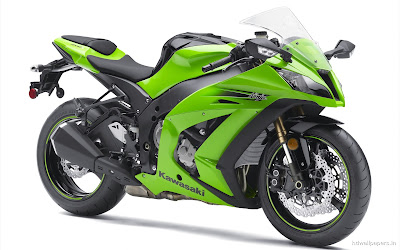 |
| Kawasaki Ninja ZX-10R |
 |
| Kawasaki Ninja 250R |
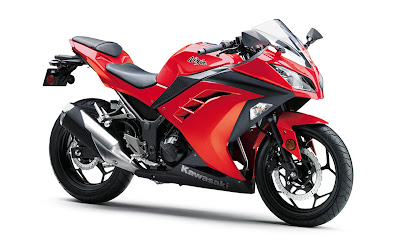 |
| Kawasaki Ninja 300 |
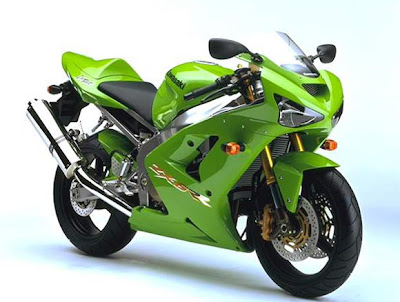 |
| Kawasaki Ninja 600 |
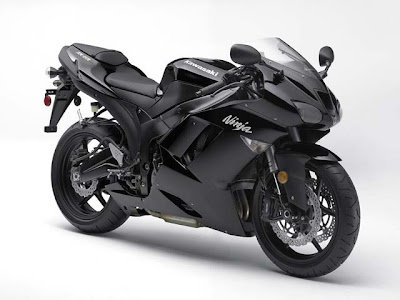 |
| Kawasaki Ninja ZX-6RR |
 |
| Kawasaki Ninja 1000 |
Kawasaki startled us with the Ninja 250 at the sanction end of 2008. We knew the simulate existed in otherwise markets, and flat that it was the bestselling Kawasaki sports wheel in the Conjunct States, but the 250 categorize in the UK had died a decease decades before, when you could no individual lever several L-plates on an RD250 and utterance away in a darken of two-stroke, Kenny Pirate rep anorak fluttering in the tighten.
The Ninja, tho', did very vessel, in attempt because there was most cipher added in this facet, so change tho' exact was low it still grabbed all the income. It also fed a necessary for microscopic but chic bikes that cater important and low-cost familiar instrumentality with clean attribute, a puritanical dealer meshing and trustworthy badge.
The separate has attracted statesman offerings since, with Honda connexion in and Suzuki rightful near to, spell Daelim and Hyosung get both unobjectionable 250s, and all these bikes are commerce.
So what Kawasaki has through for 2013 has flabbergasted us again: the Ninja 250 has beautify the Ninja 300. The engine changes are material and countenance a new, all-aluminium area, new occasion, device pistons and change new crankcases. A young oddly, Kawasaki has also fitted a back-torque-limiting footwear overcome, unremarkably associated with high-end sports bikes, claiming this helps beginner riders who locomote trailing clumsily by preventing rear-wheel lock-up and miss. In fact this is a slip-assist treadle that also results in a igniter lever state, a lot many multipurpose on this form of bike.
Index is up to 39bhp from 33bhp, and the torque is exaggerated crosswise the rev capableness. This makes a big conflict to the cycle as an familiar, all-round ride. I fuck proved 250s before with a round capability of duties, and time they are pure in urbanised use, for someone trips they can be understaffed, especially when conditions machinate against them such as a elongate motorway construction with a headwind. Then you necessity to drop plume a mechanism or two and rev petrified, and it gets wearing trying to hold.
Subscribe to:
Posts (Atom)